Low dose CT scanning in cancer care
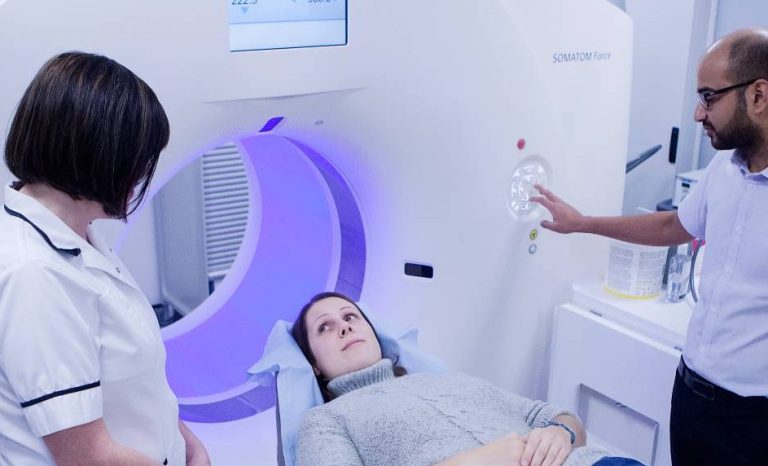
People with cancer are now able to benefit from lower radiation doses than ever before when having CT scans as part of their routine medical care and follow up. Dr Andrew Gogbashian explains.
Medical research boosts survival rates and makes in particular cancer treatment kinder on people diagnosed in the future. See some of our research articles below:

People with cancer are now able to benefit from lower radiation doses than ever before when having CT scans as part of their routine medical care and follow up. Dr Andrew Gogbashian explains.

With a brand new, faster Positron Emission Tomography and Computed Tomography (PET-CT) scanner due for installation at the Centre in 2022, Dr Wai-Lup Wong gives insight into the fascinating history of this revolutionary scanning technique which counts our founder, Dr Paul Strickland, as one of its pioneers.

A unique collaboration between Paul Strickland Scanner Centre (PSSC) and Mount Vernon Cancer Centre (MVCC) is seen as hugely beneficial to the care and treatment of cancer patients at Mount Vernon.

Research made possible by a gift left in her Will by a supporter of PSSC finds that whole-body MRI could drastically improve metastatic breast cancer care.

Collaborative project between Paul Strickland Scanner Centre and Mount Vernon Hospital shows how patients can be spared excess radiation.

We’ve joined a pilot study for the Vague Symptoms Pathway (VSP), a programme that could one day lead to a faster diagnosis of cancer for patients. The programme aims to find the quickest, most efficient way to reach a diagnosis in patients who visit their GP with non-specific symptoms. Although

Results of the PROSTAGRAM trial, held at Imperial College London and Paul Strickland Scanner Centre, have just been published in the prestigious medical journal, JAMA Oncology.

People being treated for metastatic breast cancer could be granted precious extra healthy time with their loved ones, thanks to the results of a landmark research study supported by Paul Strickland Scanner Centre.

The extent to which MRI scans can spare men suspected of having prostate cancer unnecessary biopsies and prevent needless treatment has been highlighted by an authoritative new research paper.

A short MRI scan is better at detecting aggressive prostate cancer than the commonly used Prostate Specific Antigen (PSA) test, according to a groundbreaking medical research trial held at Imperial College London and Paul Strickland Scanner Centre.

An evaluation of a highly specialist scan at Paul Strickland Scanner Centre that can catch prostate cancer earlier and possibly result in a cure has had a dramatic effect on patients’ management and treatment, according to a study carried out at the centre. Results of the study were presented at

New tracers in PET-CT imaging could make a real difference to cancer patients, says Dr Kathryn Wallitt, consultant radiologist at Paul Strickland Scanner Centre.