A proposal by the National Institute for Health and Care Excellence (NICE) recommending the greater use of MRI scanning in prostate cancer will spare thousands of people the fate of having an unnecessary or needlessly painful biopsies. So says Professor Anwar Padhani, an internationally recognised prostate cancer diagnosis expert and lead consultant for MRI at Paul Strickland Scanner Centre.
A proposal by the National Institute for Health and Care Excellence (NICE) recommending the greater use of MRI scanning in prostate cancer will spare thousands of people the fate of having an unnecessary or needlessly painful biopsies.
So says Professor Anwar Padhani, an internationally recognised prostate cancer diagnosis expert and lead consultant for MRI at Paul Strickland Scanner Centre.
The news comes as NICE has announced it recommends non-invasive MRI scans as a first-line investigation for all patients with suspected prostate cancer. This test has been available for use at Paul Strickland Scanner Centre for more than a decade.
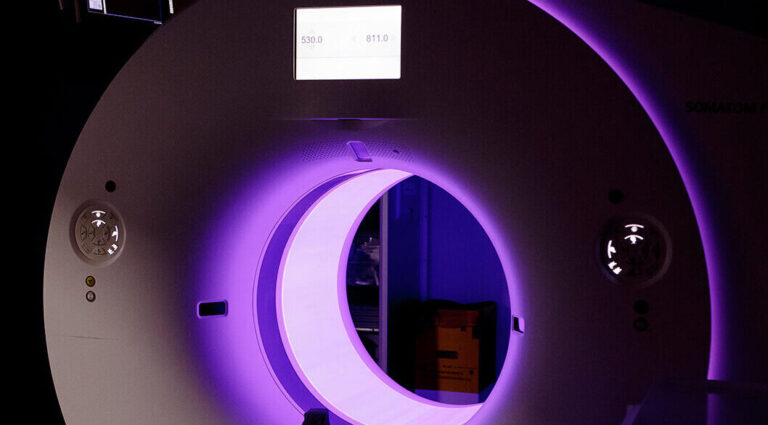
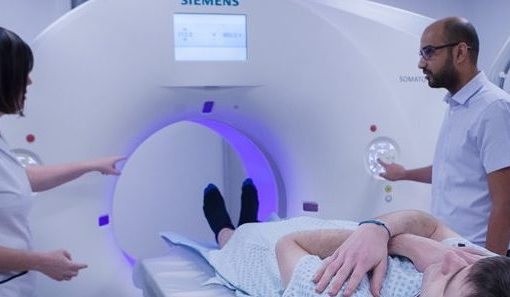
Multi-parametric magnetic resonance imaging (MRI) works by creating detailed images of the prostate that enable doctors to better detect areas that may represent prostate cancer.
Importantly, MRI also shows which patients are not likely to have the deadly form of the disease.
Currently, patients with suspected cancer are offered a blood test which looks for raised levels of prostate specific antigen (PSA). If this is raised, people may be offered a biopsy which involves inserting a needle into the prostate through the back passage to take tissue samples. The procedure can be uncomfortable and unnecessary and comes with the risk of infection.
The draft NICE guidance recommends that high quality MRI scanning should be offered as the next test after the blood test, instead of a needle biopsy. So the blood test will still be required before an MRI scan can be performed. Only those patients with positive scans then go on to have a biopsy, so patients without clinical suspicion on MRI can be spared a biopsy. This means at about a third of patients may be spared a biopsy despite a positive PSA test. Prof Padhani said: “It’s important to remember that the PSA test is not cancer specific, and there are non-cancer causes of raised PSA which include infection and enlarging prostate glands which is normal as patients get older. The MRI scans show us who the patients with cancer are.”
According to NICE, MRI is cost-effective because it reduces the number of biopsies performed. Additionally, because cancers are more likely to be detected early and cured, this helps reduce the costs associated with future treatments.
Prof Padhani said: “This is a big step forward for patients in the UK and will reduce the need for unnecessary biopsies by about a third. Those biopsies that do take place will find deadly cancers earlier, and should be less risky and painful. We are looking forward to seeing whether these changes in diagnosing prostate cancer will also improve survival in the long run.”